- Crypto Nomads' Newsletter
- Posts
- Ethereum’s conference problem was accidentally solved by Solana
Ethereum’s conference problem was accidentally solved by Solana
How two builder conferences put crypto’s ideology on display

Crypto Nomads
January 05, 2026

Editor’s note: This op-ed breaks from our usual format. We’ll return next issue with 2026 event alpha.
Crypto likes to pretend it’s post-ideological.
In 2025, two conferences proved otherwise.
Ethereum Foundation’s flagship event operated like a principle-driven collectivist experiment.
Solana Foundation’s Breakpoint ran like an institution - centralized by design, disciplined in execution, and optimized for outcomes.
The contrast exposed a deeper divide over how power, labor, and coordination are supposed to work in crypto.
Two conferences, two operating systems

Devconnect Closing Ceremony vs. Breakpoint Closing Ceremony
Devconnect (November 17-22, 2025) sprawled across Buenos Aires for nearly a week across hundreds of independently organized venues, while Breakpoint (December 11-13, 2025) compressed the experience into three tightly controlled days in Abu Dhabi.
What separated them wasn’t vibe or culture, but whether coordination and profit are structural needs or ideological compromises.

Solana’s “Revenue & Returns” promo video.
The SF invested heavily in pre-event marketing, advertising and narrative-building. The EF largely limited its efforts to in-house media production, and did not engage in paid promotions.
The Solana Foundation does not pretend markets are a side effect or an embarrassment - and it certainly does not shy away from capitalism. Even the conference theme, Revenue & Returns, was explicit and directional.
By appointing a veteran events executive with over a decade of production experience, Breakpoint achieved a level of coherence crypto conferences usually fail to reach.
The result was a program that respected attention: talks were engaging, paced, and designed to hold the room. Stages were built for structured disagreement. Formal debates asked attendees to take sides on motions like:
This House believes Solana culture is cooked.
This House rejects political alignment as a growth strategy for crypto.
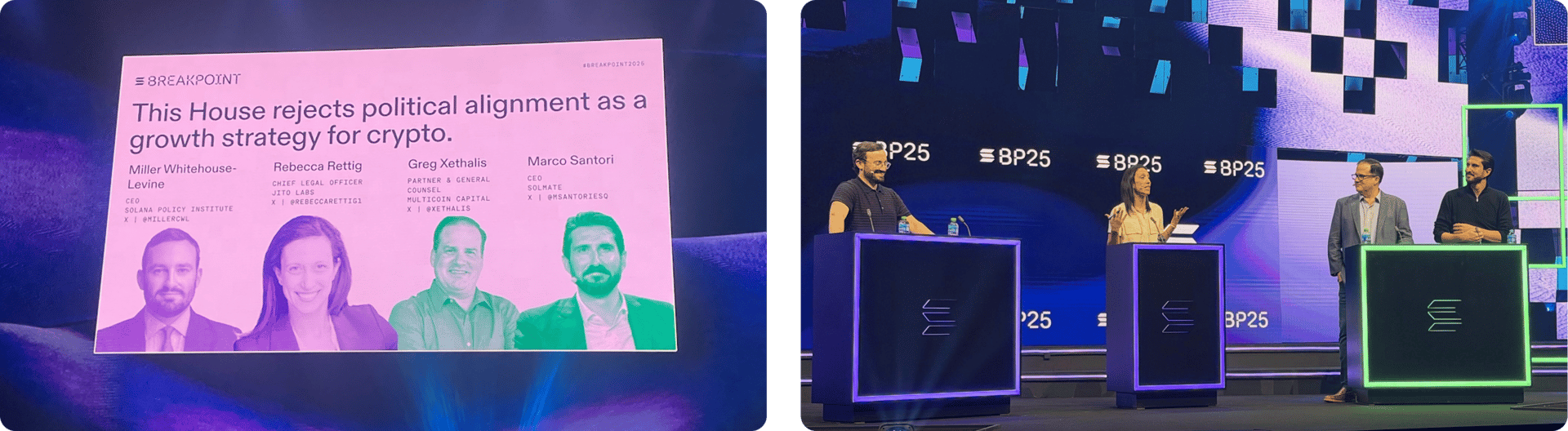
Breakpoint debate stage
The debates worked because they were genuinely entertaining and watchable. The willingness to stage conflict, declare winners, and let ideas lose is a cultural tell.

Devconnect Entrance
Devconnect began as a developer-first gathering, but a decade later the same model is straining under a much broader audience.
At Devconnect 2025, friction was routinely justified as inclusivity. Large parts of the venue were dedicated to community showcases and identity-focused programming, asking attendees to participate in an ideology, not just a conference.
Depending on your political beliefs, the less merit-driven approach was either a necessary correction or a misguidance.
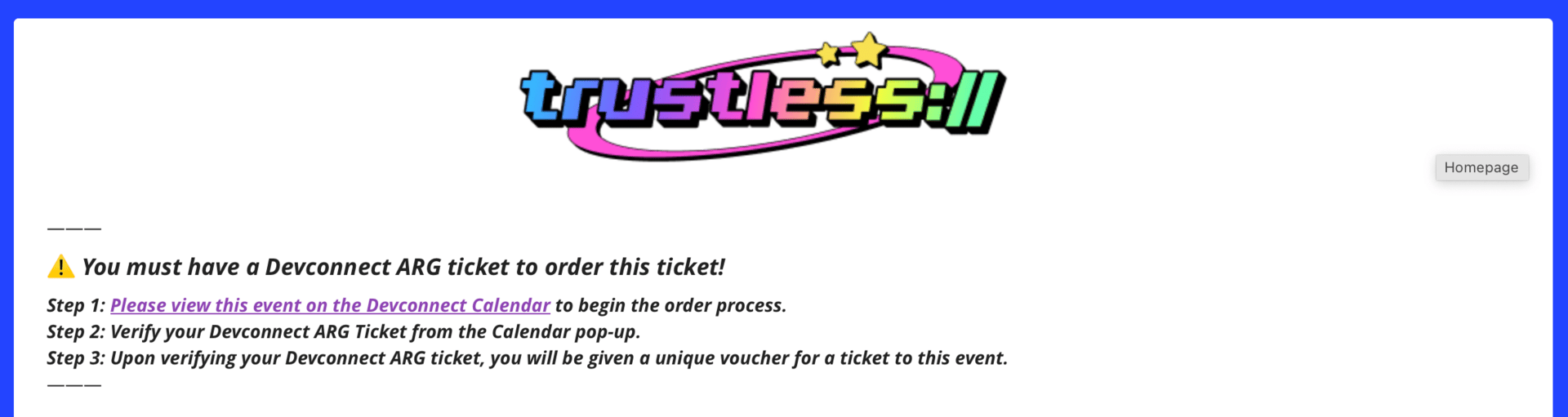
A sub-conference inside Devconnect that required extra tickets via an open-source platform ticketh.xyz.
Attendees inside Devconnect spent up to 20 minutes wrestling with additional open source ticketing to attend certain talks, while EF promoted other open tools like Lemonade.social, which saw little real usage.
Instead of empowerment, the result was friction in the name of open-source.
This ideological purity over user experience is the collectivist tradeoff in practice. In theory, it sounds principled. In practice, it drives away anyone who values their time.

Devconnect claimed 14,000 attendees, but over 40 percent entered via free allocations. It further expanded participation through capped ticket prices at $120, while Breakpoint scaled prices up to $700.
Adjusted for free distribution and significantly lower pricing, Devconnect’s paid attendance converged toward Solana Breakpoint’s ~7,000, despite Ethereum’s five-year head start.
Devconnect’s flattened access came with tradeoffs. Wi-Fi was unreliable, attendees had to step outside to take calls, and by the final day several venues felt underutilized.

Empanadas feed people. Parmesan wheels make a point.
At Devconnect, empanadas were available all day and all week. They were convenient, culturally relevant, and cost efficient. Food drifted from hospitality into background utility.
At Breakpoint, meals were treated as part of the production. From fresh poke bowls to pasta in Parmesan wheels, premium food was served precisely between talks so attention never had to choose between hunger and content.
Afterparties as signal
Breakpoint’s afterparty was official, foundation-run, and deliberately inclusive.
The Solana Foundation showed up in force — staff, leadership, builders, and partners dancing and sharing the same space late into the night.

Solana After Party
During the event, Solflare, a Solana-native wallet, executed a high-visibility activation: a coordinated drone show that distributed an estimated six-figure airdrop to all attendees.

Solflare drones in the sky
The Ethereum Foundation would almost certainly never allow a comparable activation, precisely because it would be seen as favoring one wallet, one product, one actor over others.
Neutrality is preserved by abstention. In practice, abstention functions as a form of central planning, where control is maintained by not choosing. Power still exists. It is simply exercised without accountability.
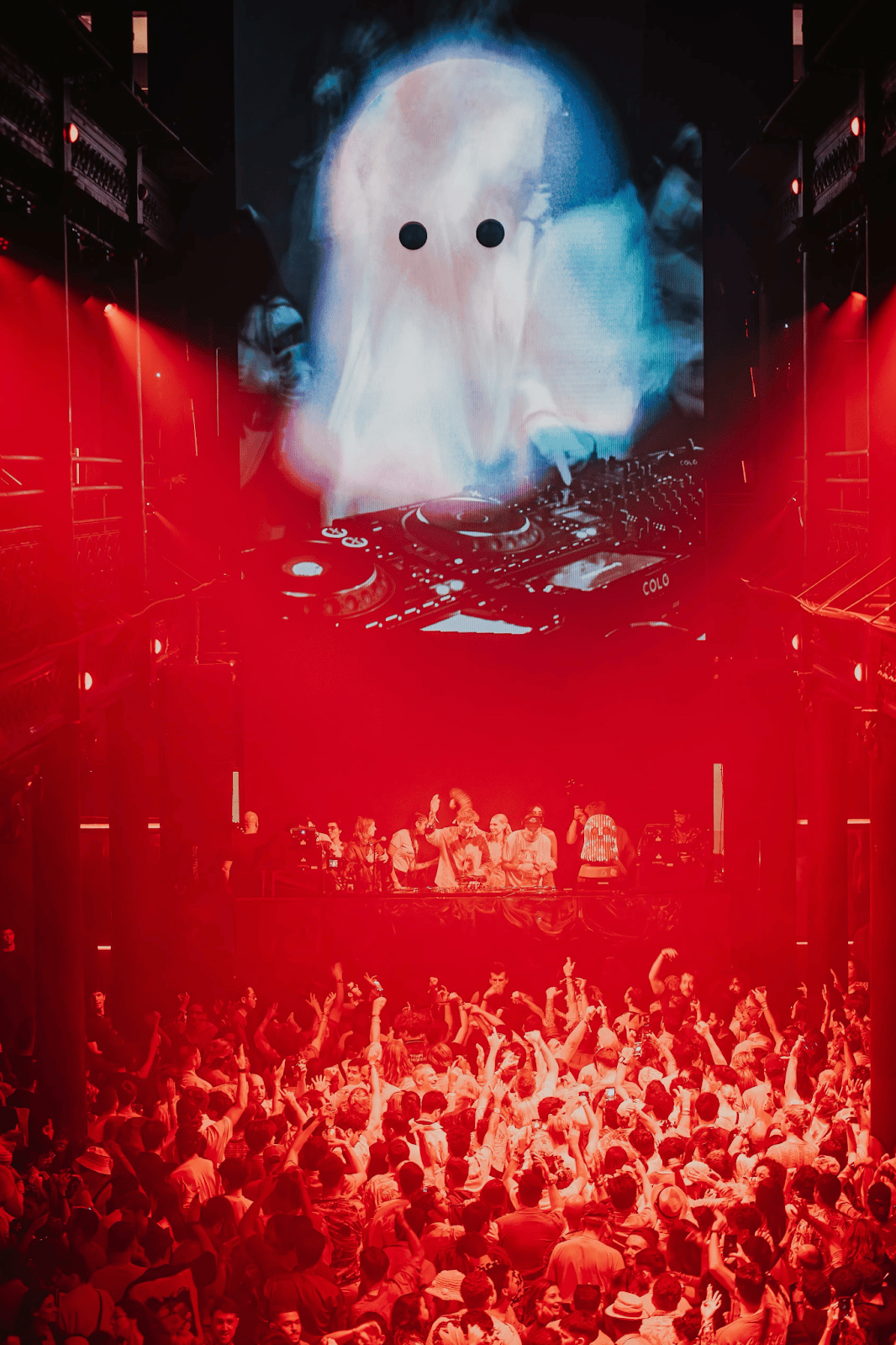
Raave party at Devconnect
Devconnect had no official after party equivalent. The closest parallel was RAAVE by Aave, a private company known for producing some of the ecosystem’s most sought-after events. Entry was limited. Lines stretched for hours. Many never made it inside.
But Aave can do what it wants. The absence of an official and inclusive Devconnect After Party is the point.
What attendees are quietly saying

Hsiao-Wei Wang, the Executive Director of the Ethereum Foundation, addressing the audience beneath symbolic visuals (left) - an image far too familiar looking to those from post-communist countries (right).
The visual language of Hsiao-Wei Wang’s opening speech echoed collectivist aesthetics: leadership framed as stewardship, the individual secondary to the mission. Several attendees from post-communist countries privately said it reminded them of the state-aligned symbolism they grew up with.
Privately, many Ethereum-aligned builders admitted a growing unease:
There are no new users: The same teams and capital continue to circulate, making the slowdown feel structural rather than cyclical.
Crypto no longer feels like the highest-upside path. AI startups offer clearer returns.
The Ethereum Foundation’s gravity around Vitalik feels stronger, not weaker. Builders described a quiet split between those aligned with Ethereum’s moral framing and those who simply want to ship neutral infrastructure. The result, some said, is visible insiders and silent exits.
There is no shared idea to rally around: No breakthrough that feels inevitable rather than aspirational.
At Breakpoint, the undercurrent was different.
Walking the venue, many attendees identified themselves as former Ethereum builders “coming to see what Solana is doing now.” Familiar faces stood out, including EF event organizer and Dankrad Feist, a researcher at Tempo and once a core researcher at the EF.
When it comes to community building and ecosystem nurturing, there are many clear ways the EF could reinforce and preserve its leading position. However, doing so would require a meaningful shift in its underlying philosophy.
What builders hear
Conferences don’t just inform. They recruit.
Breakpoint tells builders:
We know where this is going. Follow us.
Devconnect tells builders:
Help decide where this should go.
One optimizes for speed, legibility, and execution.
The other optimizes for voice, fairness, and shared ownership.
Neither approach is neutral.
In 2025, one ecosystem looked like a startup scaling with intent.
The other still resembled a movement negotiating its principles in public.
History suggests that when these two models collide, coordination beats consensus not because it is kinder, but because it moves. At scale, ecosystems that cannot coordinate cannot compete.
Builders are gravitating toward the ecosystem where incentives are aligned, coordination is fast, and most importantly, where they feel heard and supported.
Right now, Solana holds that edge.
How did you like this newsletter? |
Who Are We?
We’re building cryptonomads.org—the go-to place to discover crypto events, companies, jobs, and professionals.
We also run a private club—a community of web3 founders and builders who meet at events worldwide.